Caregiver workload is rarely caused by one difficult task. It grows through repeated transfers, awkward bending, long standing, and rushed repositioning. A resident may need help moving from bed to wheelchair several times daily. Each movement consumes strength, attention, and time. Small inefficiencies become physical injuries.
This guide examines how to reduce caregiver workload with proper equipment, especially in professional care homes and home-care settings. Thomas R. Waters, PhD, a leading NIOSH ergonomics researcher, stated, “The best way to prevent back injuries is to eliminate the need for manual lifting.” His principle remains practical: a transfer lift, height-adjustable bed, shower chair, or pressure-relief mattress should replace unnecessary strain, not merely add technology.
The right equipment must fit the person, room, care plan, and caregiver’s training. A mobile lift may reduce lifting force, but poor sling selection can create discomfort and delays. A wheeled shower chair may improve transfers, yet narrow doorways can make it unusable. Details matter.
Measure the real workflow.
Observe a full shift. Where does the caregiver reach too far? Which tasks require two people? Which device remains unused because setup takes too long? These questions reveal more than a product brochure.
Chinese equipment suppliers can offer competitive options, but price alone cannot prove value. Reliable buyers should check load ratings, cleaning requirements, adjustment ranges, training support, and documented quality controls. Even experienced teams make mistakes. Equipment reduces workload only when staff trust it, understand it, and use it consistently. Safety should remain the final measure.
Types of Caregiver Equipment in China
China’s ageing population is increasing demand for practical caregiver equipment. The National Bureau of Statistics reported that people aged 60 and above represented 21.1% of China’s population in 2023. Caregivers therefore need equipment that reduces lifting, walking, bathing, and monitoring pressure.
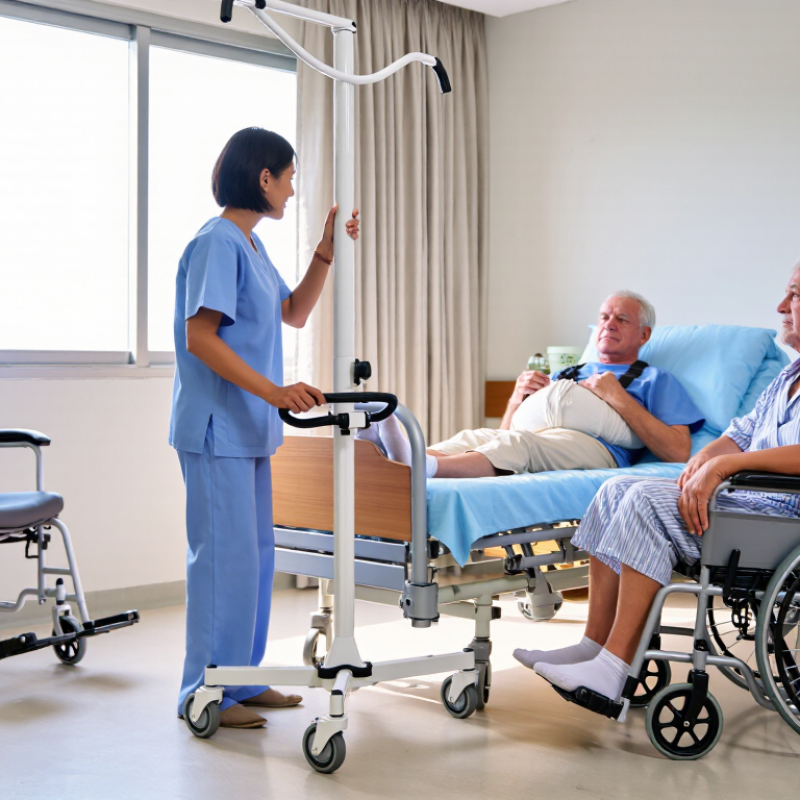
Transfer equipment includes patient hoists, transfer boards, slide sheets, and adjustable care beds. These tools can reduce repeated bending during repositioning.
Mobility equipment includes wheelchairs, walkers, commode chairs, and bedside handrails. Bathing aids, shower seats, and anti-slip flooring support safer personal care. Pressure-relief mattresses and cushions help protect users with limited movement. Smart sensors can also monitor falls, bed exits, and room conditions. Small changes matter.
The WHO and UNICEF Global Report on Assistive Technology estimates that more than 2.5 billion people need assistive products worldwide. China’s care facilities should match equipment to room size, user weight, transfer ability, and caregiver training. A powered hoist may fail in a narrow bedroom. A low-cost wheelchair may create more pushing effort on uneven floors. This is where selection becomes difficult. Equipment should be tested with real caregivers, not chosen from catalog pictures. Maintenance records, battery checks, cleaning access, and emergency procedures also affect workload. The plan may need revision after one week of daily use.
How to Choose the Right Caregiver Equipment
Choosing caregiver equipment should begin with the person, not the product category.
Assess mobility, body weight, balance, pain, home layout, and transfer ability.
The World Health Organization and UNICEF reported in 2022 that more than 2.5 billion people need assistive products worldwide. Nearly one billion people lack access. This gap shows why careful selection matters.
A transfer aid should match the user’s actual movement.
A wheeled shower chair may reduce standing time, but narrow doorways can make it useless. Check weight capacity, seat width, brake access, handle height, and cleaning requirements.
For lifting equipment, trained staff should confirm sling size and attachment points. The U.S. Centers for Disease Control and Prevention reports that more than one in four adults aged 65 and older fall each year. Non-slip surfaces, stable supports, and clear pathways deserve equal attention.
Test equipment in the real room. Not only in a showroom.
Ask whether one caregiver can operate it without twisting or excessive force. Review the manufacturer’s instructions, inspection schedule, and service records.
A 2023 National Institute for Occupational Safety and Health review links patient handling tasks with musculoskeletal injury risks among healthcare workers. Yet equipment alone cannot solve poor technique.
I have seen well-designed aids fail because staff rushed training or ignored small floor thresholds. That is an uncomfortable gap.
Recheck the choice after two weeks, because needs change faster than many care plans.
Proper Use and Maintenance of Caregiver Equipment
China Best Caregiver Equipment: How to Reduce Workload?
Proper use and maintenance of caregiver equipment can make daily assistance safer and less tiring. In practice, a transfer belt, wheelchair, shower chair, or lifting device should match the user’s mobility, weight, and comfort needs. Read the equipment instructions before use. Check locks, straps, wheels, brakes, and electrical parts every day. A small defect can become serious during a transfer. Caregivers should also explain each step clearly, because calm cooperation reduces sudden movement and physical strain.
Tips: Keep frequently used equipment within easy reach. Adjust bed height before turning or transferring a person. Use two trained caregivers when the task requires extra support. Never exceed the stated weight limit. Clean contact surfaces after use, then dry them completely. Record inspections and repairs. Simple notes improve accountability.
Maintenance is not only about appearance. Hidden cracks, loose screws, worn fabric, or weak batteries may be easy to miss. I have sometimes focused on visible dirt and overlooked the underside of equipment. That mistake deserves reflection. Stop using damaged equipment until a qualified technician checks it. Follow a regular maintenance schedule, even when the device seems fine. Proper storage also matters; damp rooms and tangled cables shorten equipment life. With consistent checks and correct handling, caregivers can reduce repeated lifting, prevent avoidable interruptions, and provide more dependable support.
Conclusion
Caregiver equipment in China includes transfer aids, adjustable beds, mobility supports, shower chairs, lifting devices, and other practical tools designed to assist with daily care. These products can reduce physical strain by helping caregivers move, lift, reposition, and support users more safely and efficiently. Understanding how to reduce caregiver workload with proper equipment is essential for improving comfort, preventing unnecessary injuries, and maintaining consistent care quality.
When choosing equipment, caregivers should consider the user’s mobility, weight, living environment, and specific care needs. Important features include stable construction, easy adjustment, secure support, smooth operation, and simple cleaning. Proper training and correct use are equally important, as equipment should always be operated according to its instructions and checked regularly for wear or damage. With suitable selection, safe operation, and routine maintenance, caregiver equipment can significantly improve work efficiency while creating a safer and more comfortable experience for both caregivers and care recipients.
 Tucson Medical
